


The Role of Communities in Forest Protection

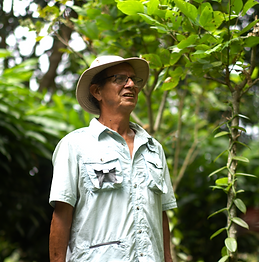
Indigenous Peoples, Local Communities and Afrodescendants (IP, LC & ADs) play a vital role in safeguarding tropical forests.
These communities manage vast swathes of the world’s remaining tropical forests and bring essential knowledge, values, and stewardship practices to their protection.
.jpg)
Effective forest protection depends on their meaningful involvement - respecting rights, recognizing knowledge, and enabling fair and equitable sharing of benefits.
Voices of the Forest
Afro-Ecuadorian, Indigenous, and Local Perspectives on forest protection


About Emergent
Emergent works with forest governments and buyers to channel funding into high-integrity jurisdictional REDD+ (JREDD+) programs.
These government-led programs reduce deforestation across entire countries and regions and are designed to support forest protection while delivering benefits for Indigenous Peoples, Local Communities and Afrodescendants (IP, LC & ADs).
All programs must meet strict social and environmental safeguards, including requirements for participation, transparency, and equitable benefit sharing.
Above: Emergent team members celebrate signing a landmark agreement with Ecuador to access $30m in climate finance via the LEAF Coalition, Puyo, 2025
How Jurisdictional REDD+ Supports IP, LC & ADs

Scaling Finance to Support Livelihoods and Sustainable Development
Emergent mobilizes large-scale climate finance to support government-led jurisdictional REDD+ (JREDD+) programs.
These programs reduce deforestation across entire countries and regions by creating sustainable alternatives to forest loss and strengthening forest protection policies.
They are designed to provide long-term, predictable finance that deliver benefits for communities and local livelihoods.

Participation and Benefit Sharing in Practice
Meaningful participation and fair benefit sharing are central to how these programs operate.
Communities are engaged through consultation processes that shape program design and how funds are used, including the development of transparent Benefit Sharing Plans.
These plans ensure finance delivers tangible local benefits. Without clear evidence of consultation and robust benefit-sharing arrangements, jurisdictional credits cannot be issued.

Social and Environmental Safeguards
All programs must meet strict social and environmental safeguards and respect the rights of IP, LC & ADs.
Credits are issued under high-integrity standards such as ART TREES and the World Bank’s FCPF, which require participation, transparency, and equitable benefit sharing.
These standards are consistent with the principles of the Cancun Safeguards, and, in the case of TREES, explicitly operationalize them within the standard.
Under these safeguards, governments are required to:
1) Respect IP, LC & AD rights and traditional knowledge.
2) Ensure full and effective participation of IP, LC & ADs.